FIRST TECH CHALLENGE
FTC Robotics — Robot Design & Build
Overview
I participated in FIRST Tech Challenge (FTC) throughout all four years of high school, taking on a leading role in mechanical design and building during my junior and senior years. Each season began with a newly revealed game challenge, requiring us to quickly turn ideas into a working competition robot.
My role
I led the mechanical design team and served as the manufacturing and assembly lead during my junior and senior years. In junior year, I completed the entire robot’s mechanical design and CAD myself. In senior year, I led the team while personally designing a substantial portion of the robot, particularly the intake, claw/outtake, and climbing mechanisms. I also contributed to programming.
Senior year · 2024–25 · Into the Deep
Design challenge
The robot needed to collect small rectangular blocks from the floor and lift them into baskets roughly 26 and 43 inches high, or precisely hang clip-equipped blocks onto horizontal bars. The climbing challenge required it to pull itself onto a lower bar, then reach and engage a higher bar to lift itself further off the ground. These tasks demanded reliable pickup, controlled placement at extended reach, and a climbing mechanism capable of supporting and transferring the robot’s full weight.
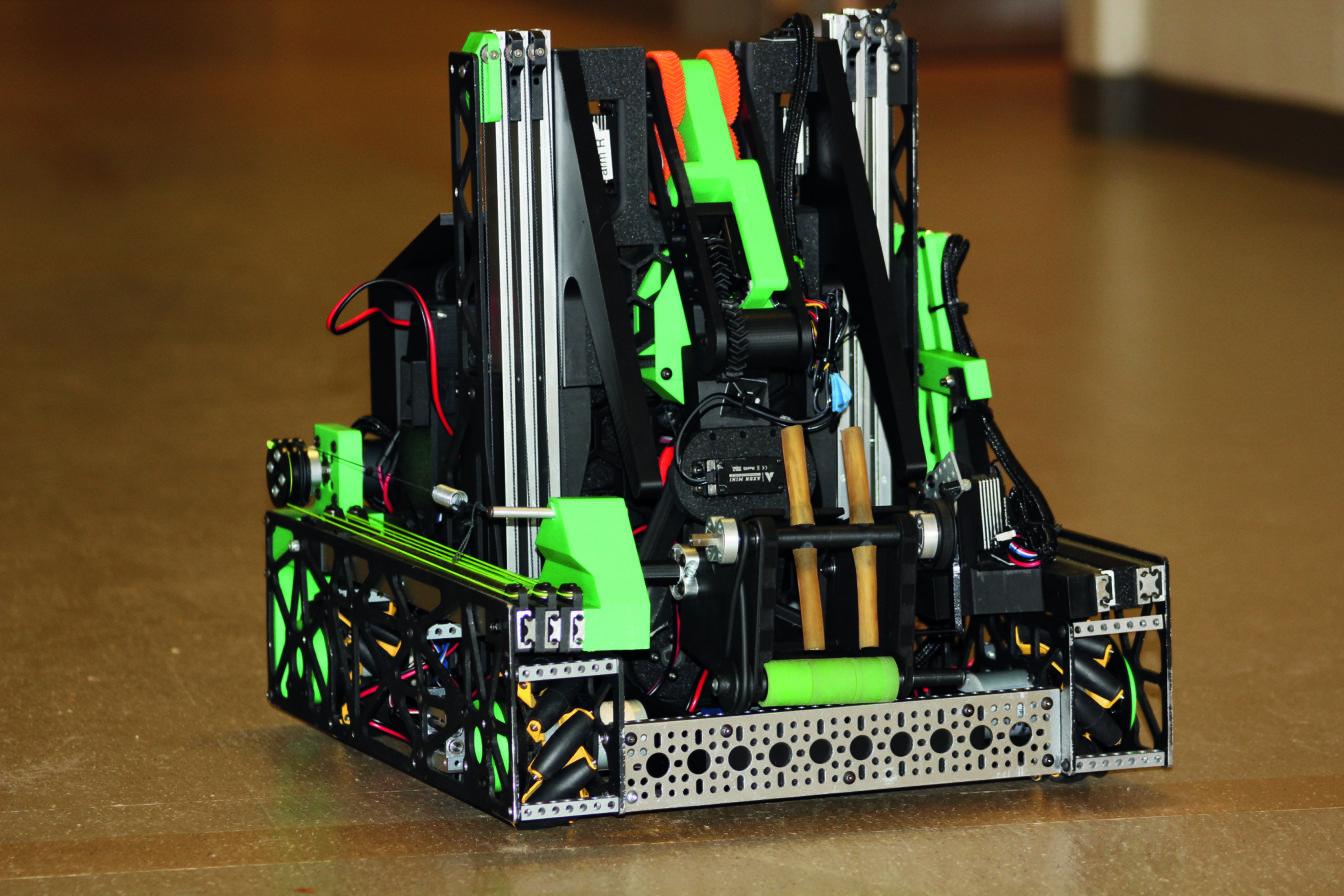
TEAM RESULTS
Washington State
Finalist Alliance Captain
Control Award
Michiana Premier Event
Participation
Winning Alliance Captain · Asimov Semifinal and Wu Interleague
Official season results ↗Junior year · 2023–24 · Centerstage
Design challenge
The robot needed to collect flat, hexagonal pieces from the floor and arrange them on an inclined scoring panel, building patterns at progressively greater heights. This required an intake that could handle thin pieces reliably and a lifting mechanism that could position and release them accurately. Additional tasks included suspending the robot from an overhead bar and launching a paper aircraft toward a target area.
TEAM RESULT
Washington State Design Award
SENIOR-YEAR INTAKE
From concept to “touch and go”
The Challenge
We identified the intake as our highest-priority mechanism because every scoring cycle depended on collecting a piece. Rectangular blocks lay in unpredictable orientations, and field obstacles complicated access. This was especially challenging during autonomous operation, when the robot needed to collect pieces reliably without a driver adjusting its approach.
We set a “touch-and-go” target: collect a piece in any orientation within half a second of contact. The intake needed to tolerate misalignment mechanically, making pickup fast and dependable in both autonomous and driver-controlled operation.
Selecting an Approach
I explored roller intakes, claws, suction, and alternative gripper designs. After reviewing the concepts with my team against the game’s requirements, we selected a roller intake for further development.
Seven Iterations
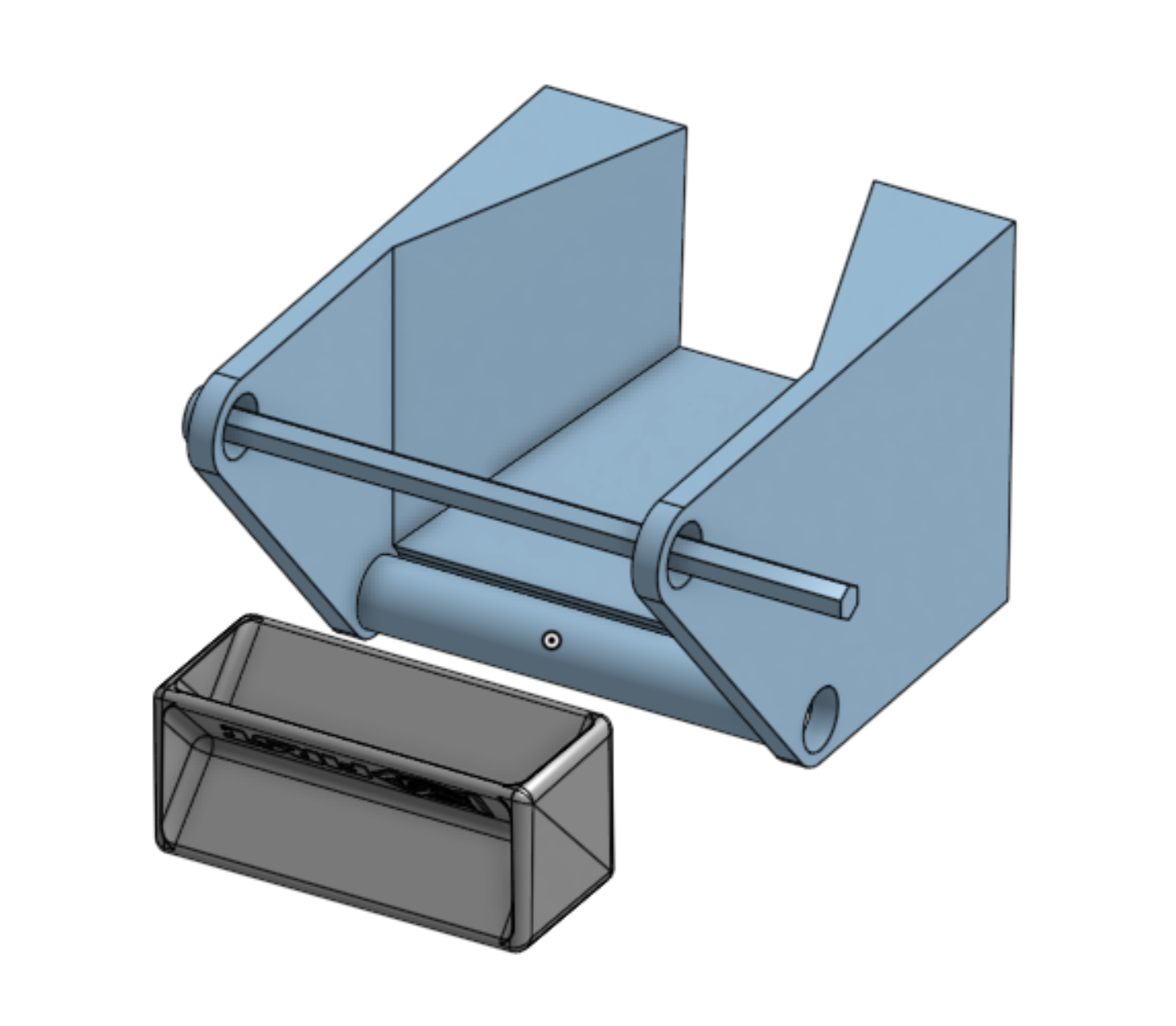
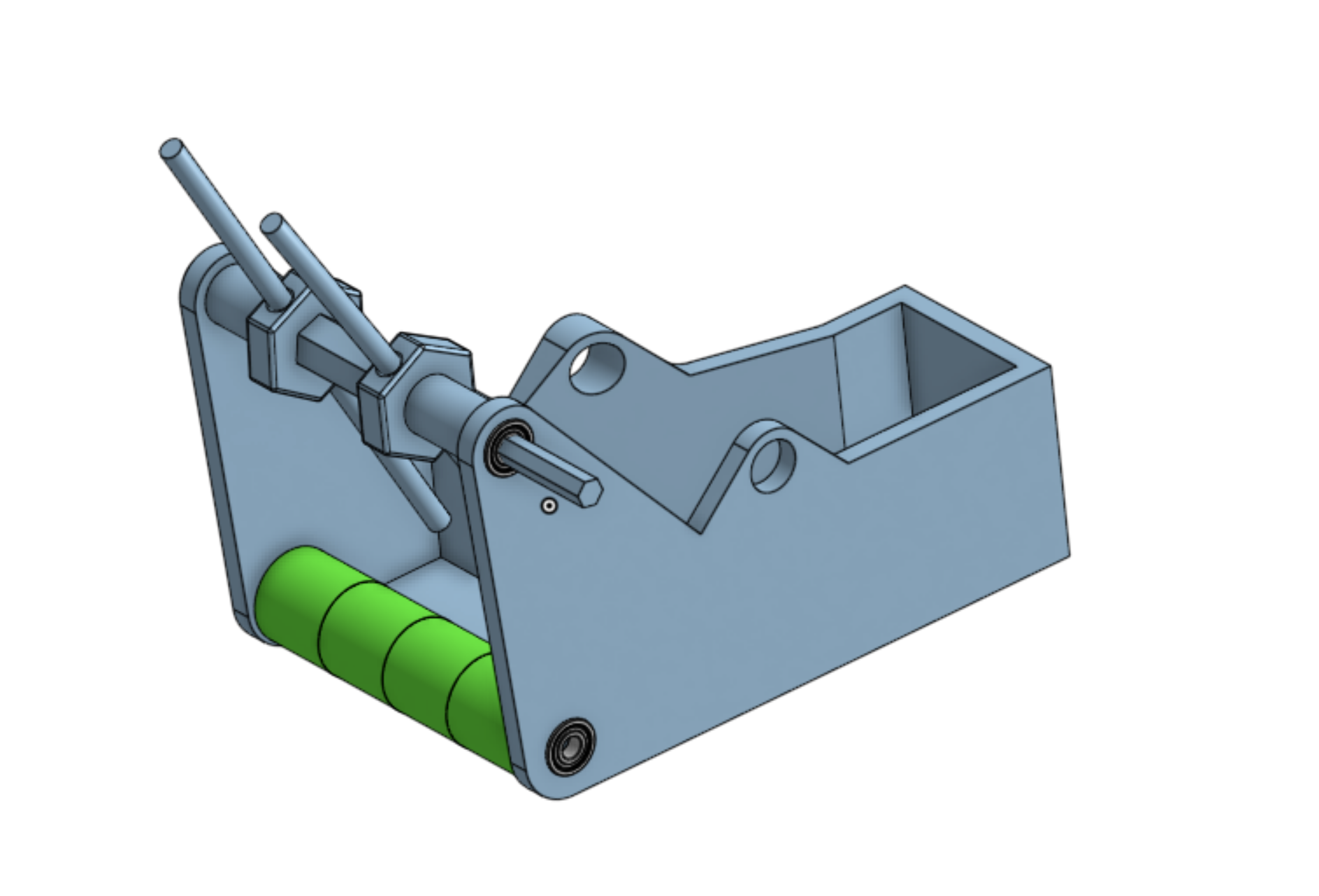
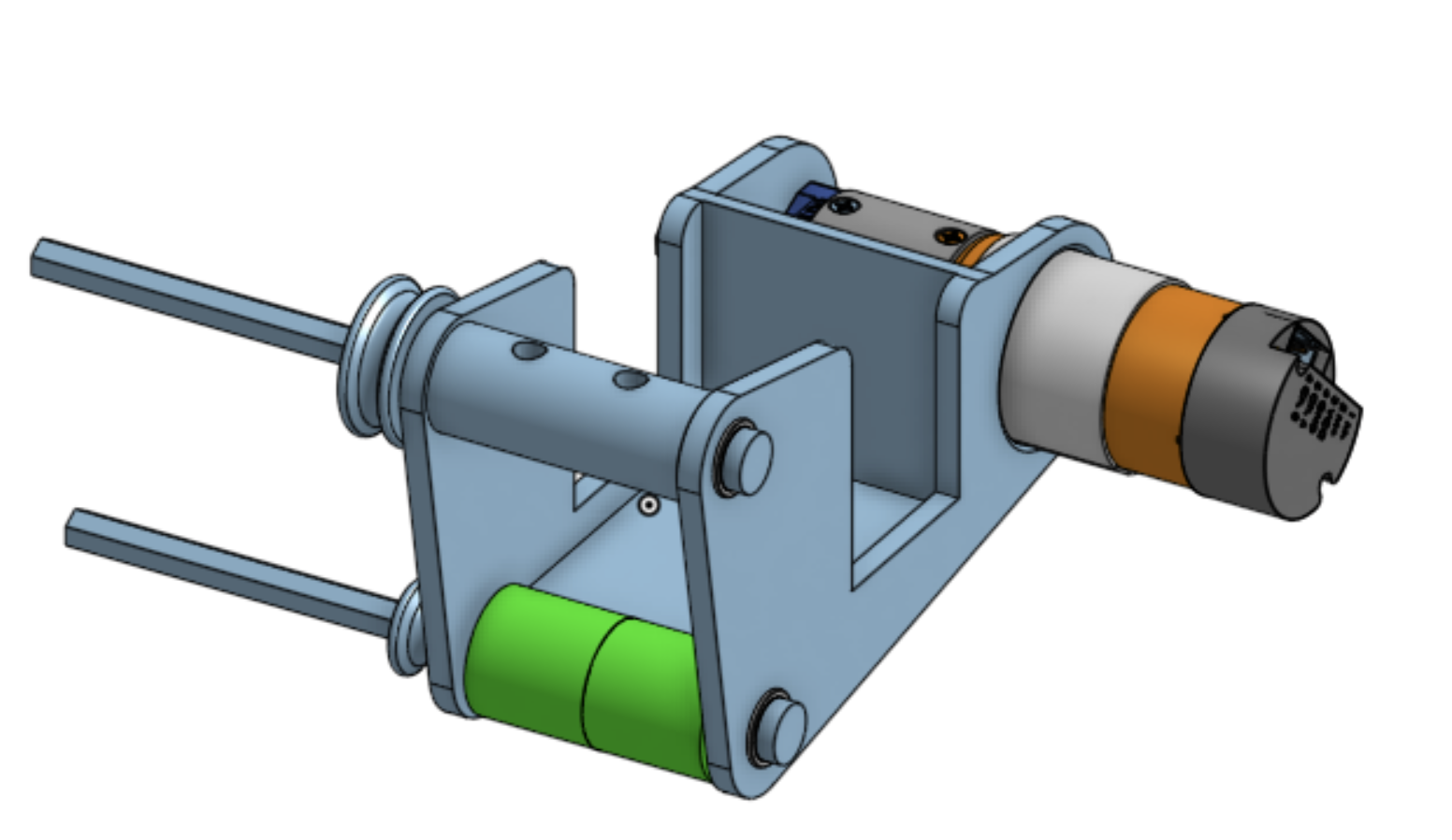
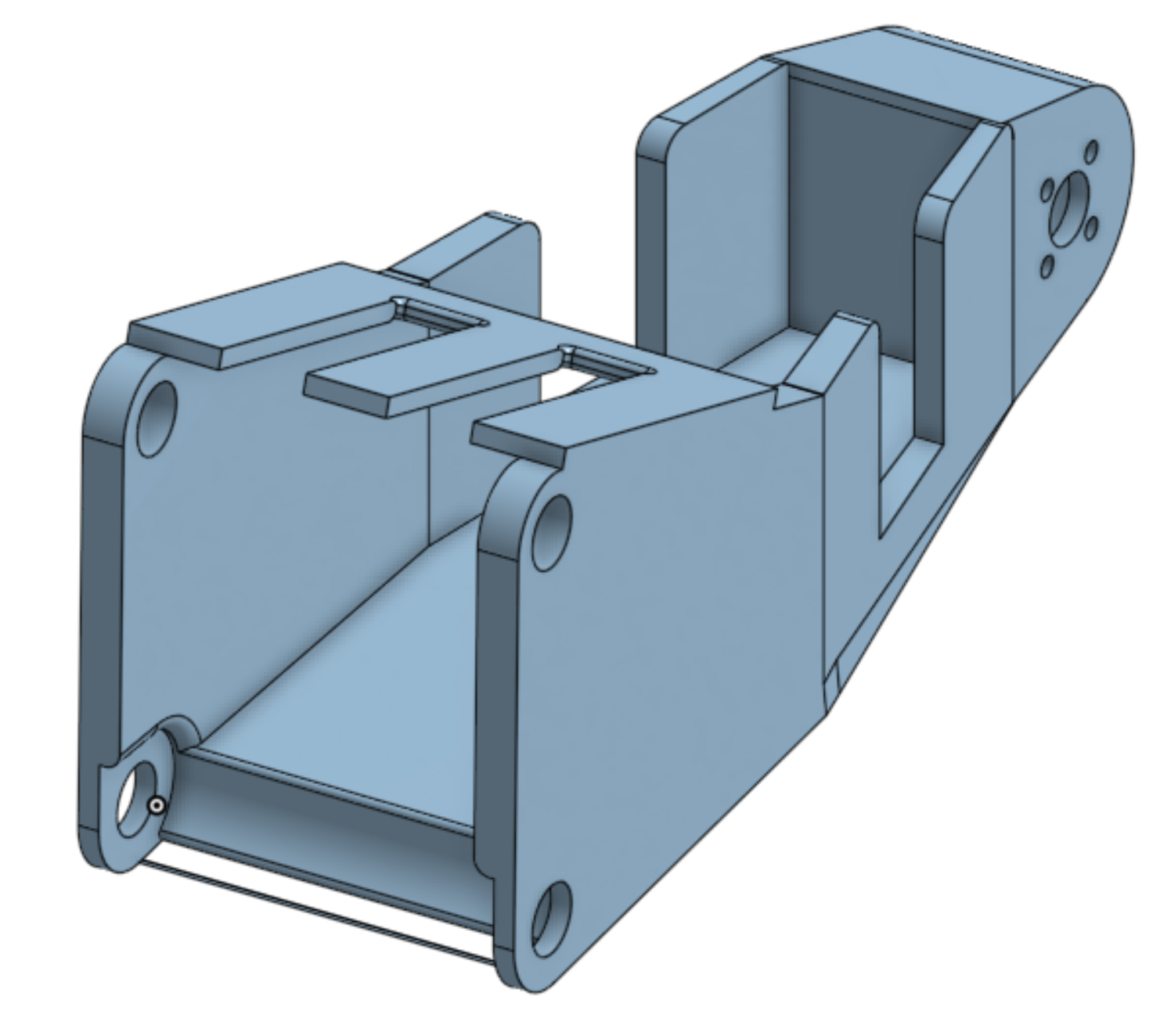
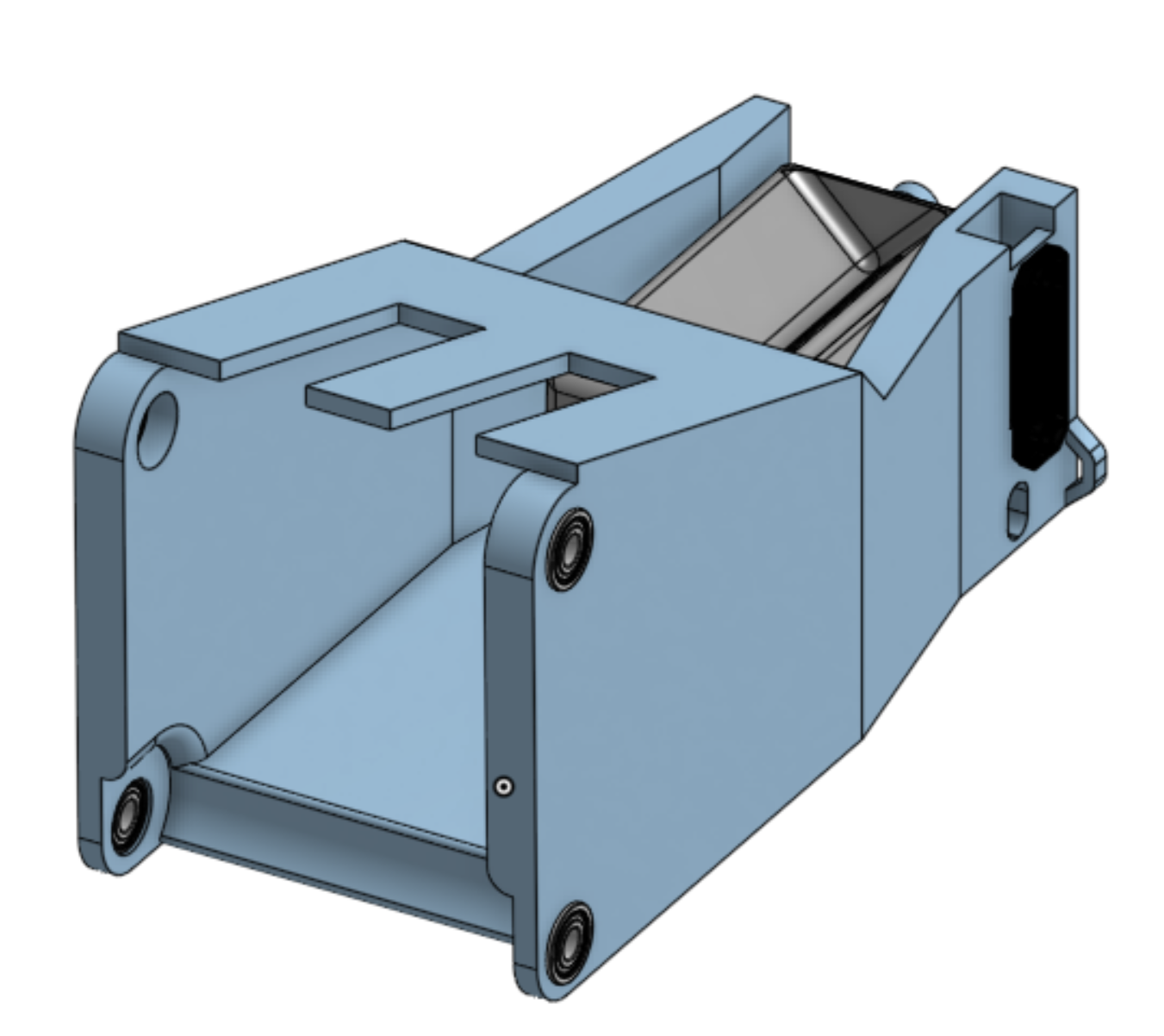
I developed seven iterations through a repeated cycle of CAD, 3D printing, and quick physical tests. Testing each version let me observe how it handled different piece orientations and use those results to refine the next design.
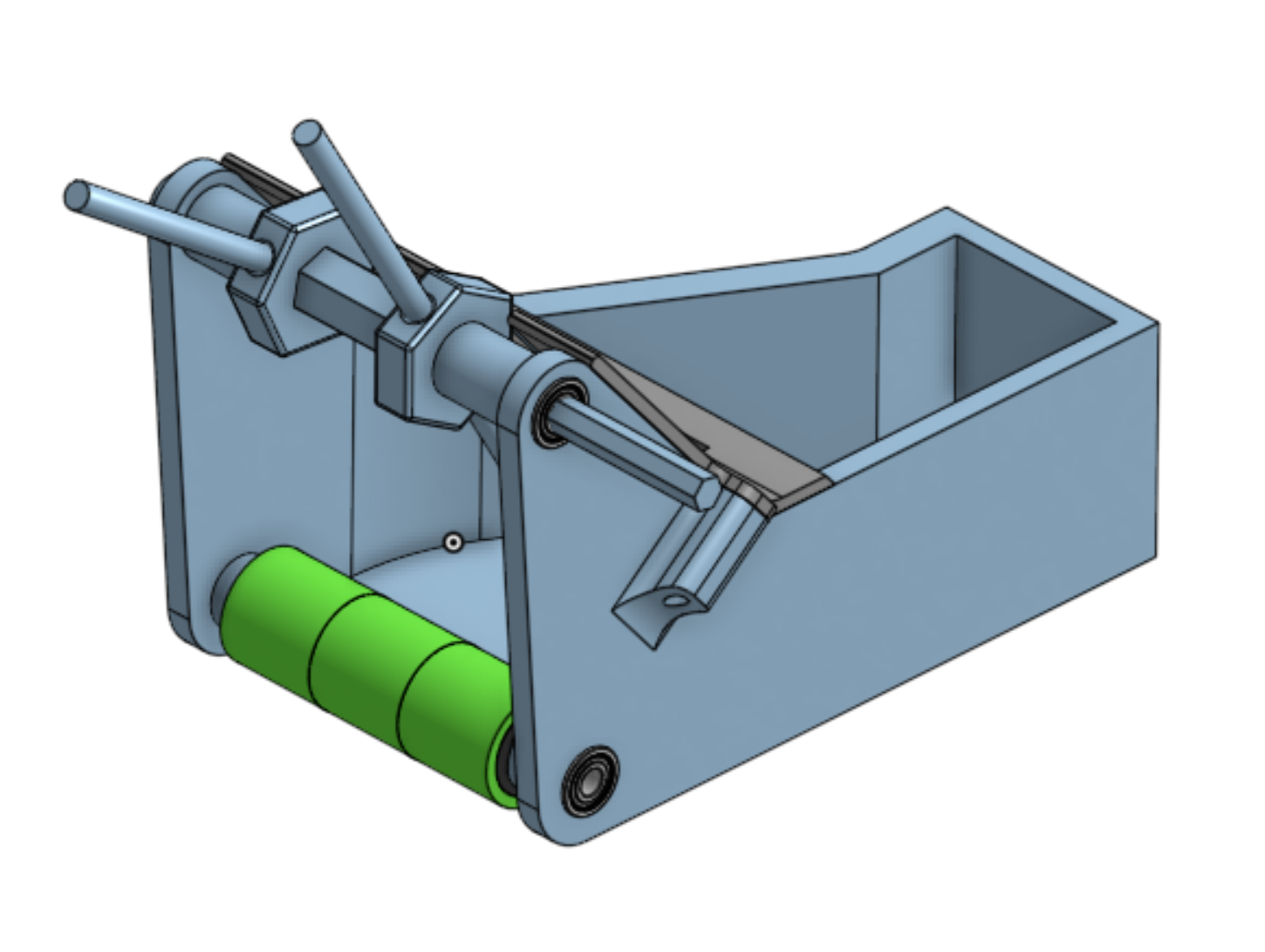
The final intake had an opening slightly narrower than the block’s longest dimension, with a small lower counter-roller and large, tessellated TPU wheels above it.
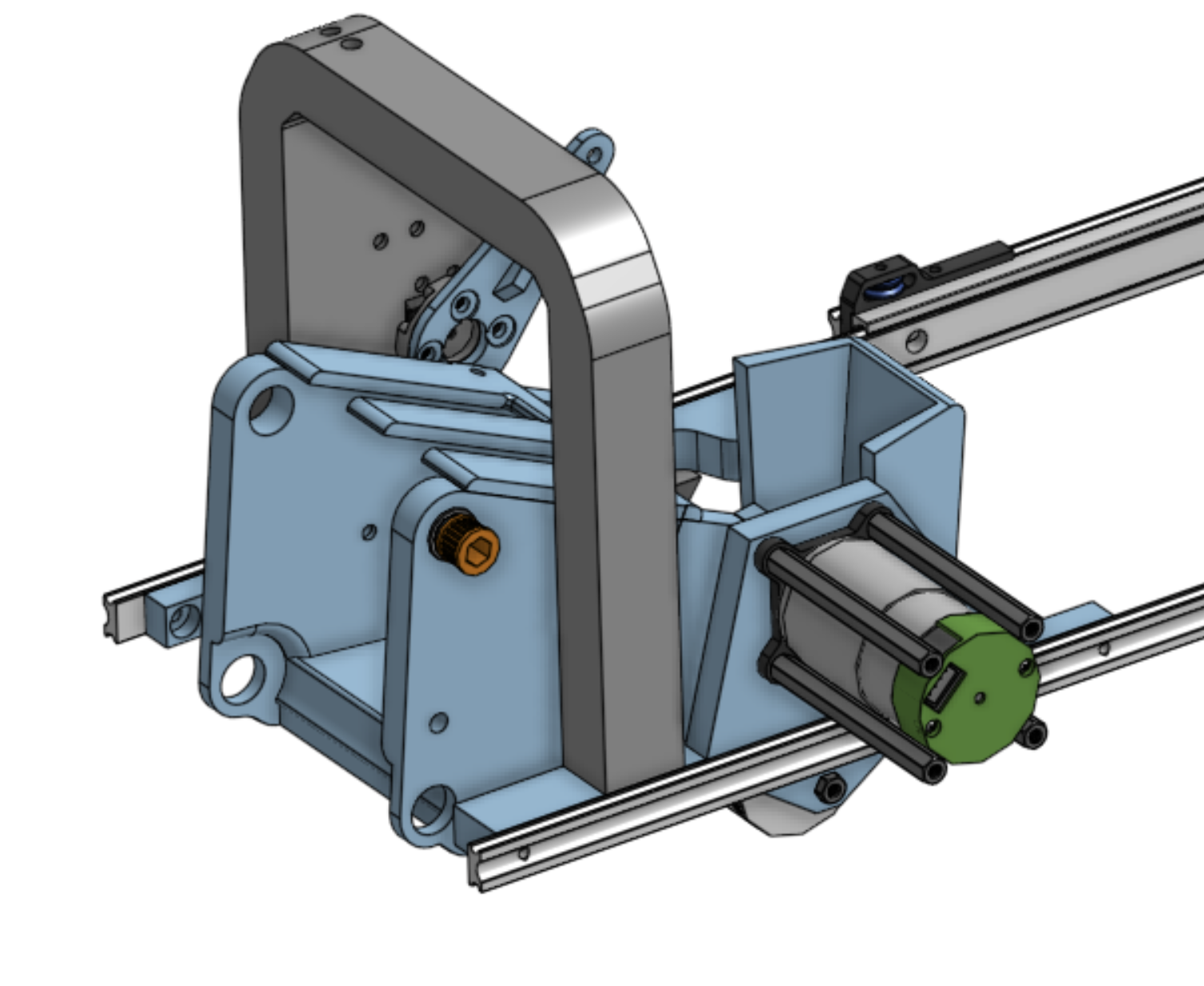
Seven CAD iterations
Why the final design worked
The intake opening was slightly narrower than the block’s longest dimension, guiding it into a consistent orientation. I tuned the clearance through testing to allow that reorientation without jamming.
The tessellated TPU wheels provided compliance, allowing them to deform as the block rotated while maintaining downward contact pressure for fast pickup. A small lower counter-roller helped pull the block across the entrance, preventing it from catching on the lip.
Together, the opening geometry and roller arrangement enabled fast, forgiving pickup across different starting orientations.
The Result
The final design achieved our touch-and-go goal, collecting pieces across different orientations within half a second of contact. Its reliable pickup made our autonomous routine more forgiving of alignment errors and helped the robot maintain efficient scoring cycles.
Connecting Design to Building
FTC sparked my interest in rapid prototyping and turning designs into working hardware. I especially enjoyed building the parts I had designed and seeing how they behaved beyond the CAD model. Each prototype revealed something I could improve, making the cycle of designing, building, testing, and refining one of my favorite parts of engineering.
Leading manufacturing and assembly also gave me immediate feedback on my design decisions. Making parts, fitting components together, and repairing mechanisms taught me to look beyond function and consider manufacturability, simplicity, robustness, repairability, and ease of assembly. Each build became an opportunity to make the next version better.